|
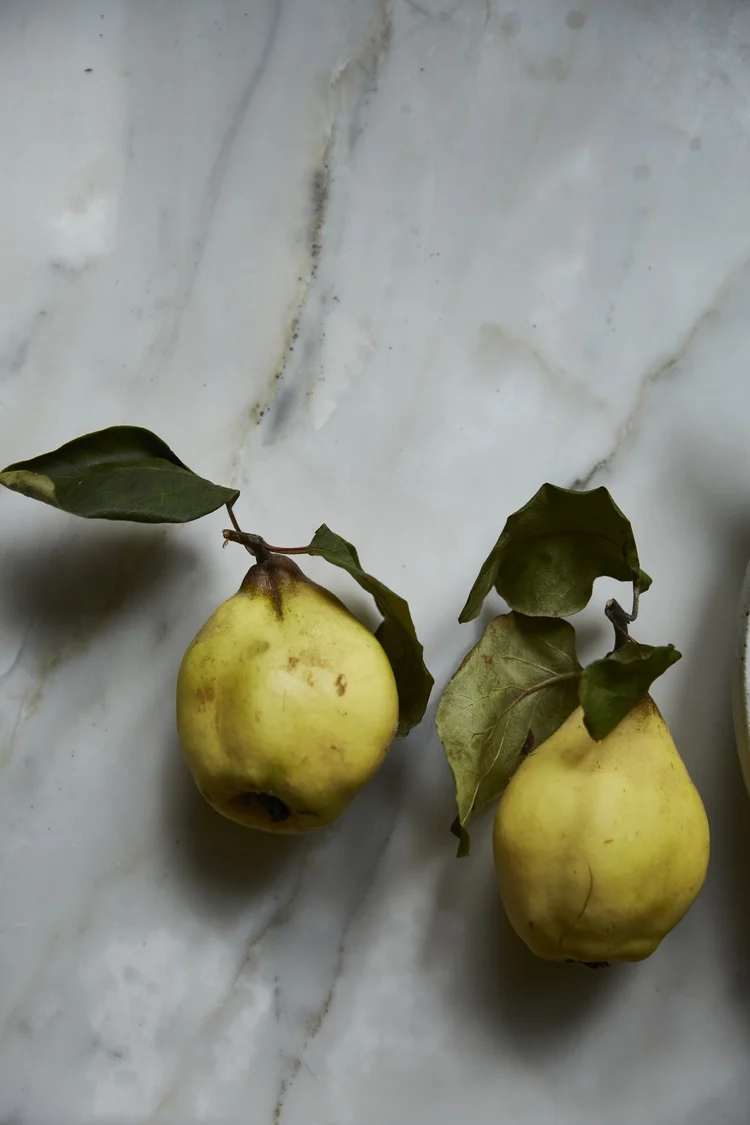
Quince & Vanilla Bean Jam I always say quinces are some of the most fragrant fruits out there. But what do they smell like you might be wondering; pineapple, apple, chamomile, rose, and honey all come to mind. In fact, I am often tempted to keep them in a large bowl on the kitchen counter because I simply love smelling them. Their perfume is intoxicating when they are ripe. Eventually I cook them. I am so glad I do because they are delicate, creamy, can be as sweet as you want them to be, and the color! Quinces must be cooked; they are hard and inedible when raw. If they are green when you get them, let them ripen on your kitchen counter until they turn golden and fragrant. You can poach quinces in a light sugar syrup with spices. I vary the sugar amount, but as a general rule, I use 4 parts of water to 1 part of sugar. You just need enough syrup to cover the fruit. I peel the quinces and cut them in half and don’t even bother with removing the core. Once poached, they can be roasted with a little bit of the poaching syrup and honey. They can be also be pureed after poaching and turned into a quince sauce as you would applesauce. Of course, you must make quince paste or quince cheese as it is called in some places (membrillo in Spanish), which is delicious on any cheese board. Don’t miss my recipe for Quince Paste in my book Cannelle et Vanille. And don’t miss the Quince-Chamomile Oat Bar recipe in Cannelle et Vanille Bakes Simple. This jam recipe is an easy introduction to quince. It is lightly sweetened and slightly acidic. You can increase the amount of sugar if you would like, which will give you a thicker jam. This is not meant to be marmalade. It is a loose-ish jam. Read these tips before making the recipe: - Quince still seems to be an unknown fruit in most of the US. It grows really well in climates where apples thrive so chilly winters help. You can likely find it at the farmers although I can also find it at a couple of supermarkets in Seattle. I have friends who have friends with a tree and that is how I get a large amount every year. - Quinces have fuzz on their exterior as peaches do. Wash them before peeling. Remove any brown or dark spots while you are cutting them. - Quinces are hard to cut so be careful not to hurt yourself. Once you peel them, quarter them with a sharp knife. Coring them can be a bit trickier as this hard core will not soften even after cooking. So make sure you get all of the hard core before making the jam or you will end up with hard pieces. This tip is not for this specific recipe, but when I poach quince other times, I simply leave the core in and then cut it out after poaching. Easy to core that way. - Collect all the skins and seeds and put them in a muslin bag (or make one out of cheesecloth) because there is a lot of aroma and pectin in these and we don’t want to waste that. - This is not a very sweet jam so you can increase the sugar to 600g if you would like. It will thicken more the more sugar you add. - You can add other spices to this jam like star anise, cinnamon stick, or cardamom pods. I kept it very simple this time. - I didn’t do this for this recipe, but you can check the set point by adding a teaspoon of the cooked jam to a frozen saucer or small plate and see how it ripples. Since this is meant to be a loose jam, I didn’t find that step necessary. - If you haven’t made jam before, I recommend using a candy thermometer. Many jam recipes say to cook the fruit and sugar mixture to 220°F (104°C), but I find that jam texture a bit too “hard” for me. I prefer something that ripples and spreads more so in general I tend to cook my jam to approximately 215°F to 218°F (101° to 103°C). The texture will also vary with the amount of pectin and sugar in the recipe. Makes approximately 5 (12-ounce or 340 g) jars 1800 g water 100 g freshly-squeezed lemon juice 1200 g quince, peeled, cored, and cut into medium pieces (about 4 large quince) (see headnote about reserving skins and seeds) 400 g granulated sugar 1 vanilla bean, split lengthwise and seeds scraped · Combine the water and lemon juice in a large stockpot. Quince tend to oxidize very quickly once peeled so I like to work with one quince at a time. Peel, cut into quarters, core, dice, and add in to the lemon water as you go. Reserve the skins and seeds and add them to a muslin bag or tie some cheesecloth into a sachet (as you would for aromatics) and set aside. · Bring the mixture to a boil over high heat. Once the water is boiling, cook for 5 to 10 minutes until the quince is soft and tender. Use a potato masher to break down the quince or puree it with an immersion blender. · Add the sugar, vanilla seeds, and the sachet with the skins and seeds into the quince mixture. Give everything a good stir. Reduce heat to medium and cook the mixture until thermometer reads 215°F to 218°F (101°C to 103°C). This will take about 60 to 80 minutes depending on how big your pot is and your heat intensity. You can let it simmer without stirring much for the first 45 minutes, but after a while it will thicken and the sugar can start sticking to the bottom of the pan, so be sure to keep an eye on it and give it some stirs especially towards the end of cooking time. The jam will have thickened but still feel loose. Remove the sachet from the jam. · Pour the jam into clean mason jars. Be careful as it will be very hot and can burn you. Let the jam cool for 30 minutes. Close the jar with a lid and refrigerate once cooled. The jam will keep in the refrigerator for a couple of weeks.
|