|
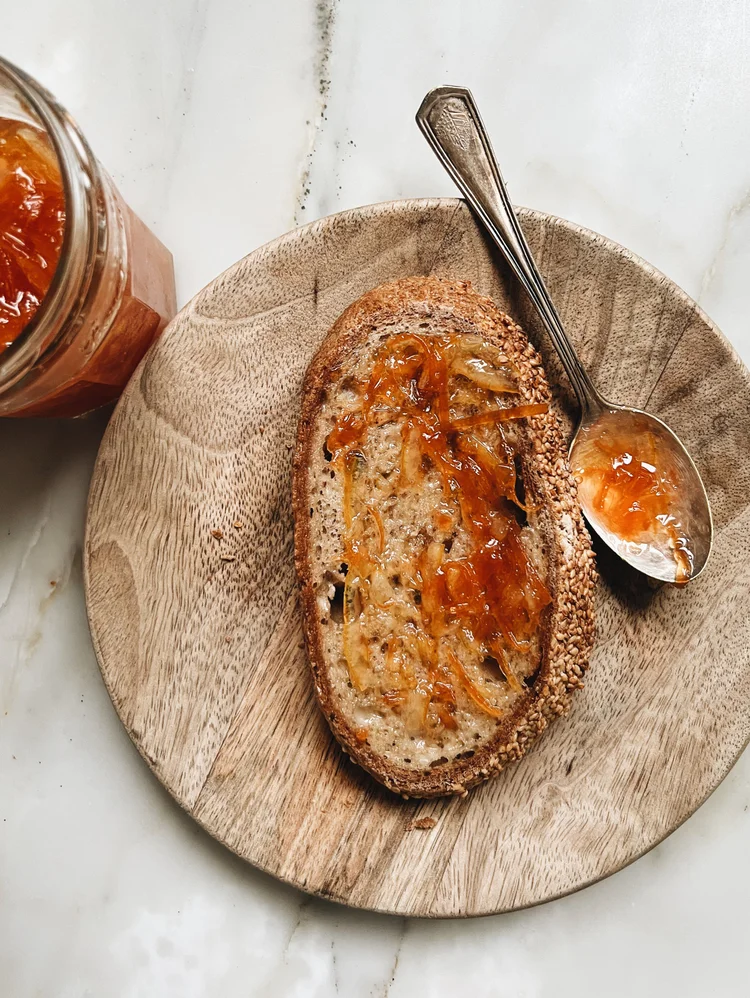
Meyer Lemon-Grapefruit Marmalade Sometimes I think I love making marmalade more than I love eating it. I find the process meditative - getting lost in thought as I slice the fruit with razor-sharp focus. Takes me back to the days as a pastry cook when we did nothing but chop fruit all day long. Music in the background and utter silence from everyone in the kitchen. I am very particular about how I like my marmalade. I like it jammy-er than very set. Marmalade that you could eat with a spoon on its own or stir into yogurt without being clumpy. One that flows easily. Nothing makes me happier than seeing the translucent syrup with suspended threads of zest. There are different methods of making marmalade. A while back, I shared a Meyer Lemon marmalade made with the whole fruit method where the fruit is cooked whole, then sliced, seeds collected and cooked in the pectin-drenched syrup. The recipe below follows a different method where the fruit is first sliced, blanched, and then cooked with sugar and collected seeds. I don’t have a preference in method. The goal is always to extract natural pectin from the seeds and skins, minimize pith or any other unpleasant bits, keep a bright flavor, and a nice translucent syrup. A few notes about this recipe: - Read the entire recipe before you start making it. Note that the process begins the night before so plan for that. - Preferably, pick fruit that is not sprayed and is organic. Make sure the skin is smooth. - If you cannot find Meyer lemons, use lemons with thin skin. If they are thick, you might have to blanch them a bit longer to soften the skin. - Make sure to cut the fruit as thinly as possible – julienned. The marmalade will be much more refined when the fruit isn’t chewy and melts in your mouth. Sharpen your knife before you start chopping. Cutting the fruit and collecting the seeds is time-consuming but makes a big difference. - Collect any juices from the citrus as you cut along. We want to save every aspect of the fruit, except the grapefruit pith. - Keep saucers or plates in freezer to check for doneness. This allows you to see how the marmalade will feel after it’s completely set. I also have a candy thermometer in my pot the entire time but sometimes it’s better to go by feel than just temperature. I like the consistency of my marmalade to be a bit runnier than what you might traditionally find in stores. But cook it to the texture you like. Take a spoonful of marmalade and place on the frozen plate. Swirl it around and wait a minute to see how it sets. - I didn’t add any canning instructions since it’s a small batch but you can search online for canning instructions for this size jar and citrus marmalade. You can apply same method to this recipe. Makes three 8-ounce jars 3 medium (225 g) Meyer lemons, washed and ends trimmed 1 (550 g) large red grapefruit, washed 2 cups (400 g) sugar 1/4 teaspoon kosher salt 1. Prepare lemons. Cut the lemons in half lengthwise. Then, cut each piece in half lengthwise once again. Keep a bowl lined with cheesecloth next to you to collect all seeds that you find inside the lemon. Cut each quarter into 1/8-inch thin strips. Place the lemon strips into a medium stainless steel saucepan. Collect any juices that remain on your cutting board into a measuring cup. Set aside. 2. Prepare the grapefruit. Using a vegetable peeler, cut thin strips of the grapefruit skin. Cut each strip into pieces that are about 3/4” to 1” long and thinly slice into 1/8-inch strips. Add the grapefruit peel into the pot. Cut all the pith off the grapefruit and discard it. Then, cut segments of the flesh and cut these segments into 1/2-inch pieces. Place the grapefruit segments into a bowl. Squeeze the remaining juice into the measuring cup that also holds the lemon juice. Also, collect any grapefruit juice that remains on cutting board. You should have about 1/2 cup (115 g) of juice. If not, add some more juice. Collect any grapefruit seeds and add, along with the grapefruit core, into the cheesecloth-lined bowl that also has the lemon seeds. Tie the cheesecloth to make a little pouch or packet and set aside. 3. Add enough cold water into the pot to cover the fruit. Bring the water to a boil over high heat and cook for 5 minutes. Drain through a sieve and return the blanched lemon pieces and grapefruit peel into the pot. Add 1 quart (900 g) cold water into the pot, along with the 1/2 cup (115 g) juices, cut-up grapefruit segments, and cheesecloth pouch with the seeds. Bring liquid to a boil over high heat. Immediately, remove from heat, cover pot, and let it sit for 10 to 12 hours. This will help extract the natural pectin from the seeds. 4. The liquid should have a little bit more viscosity after the resting period. Put two to three saucers or small plates into freezer. Bring the liquid to a boil over medium heat. Add the sugar and salt and cook, stirring occasionally, until the temperature reaches 218F to 220F, about 25 to 35 minutes. During the last few minutes, the marmalade will thicken and bubbles will become smaller. Watch it closely and stir so marmalade doesn’t burn and stick to the bottom. See headnote about my preferred consistency. Remove one of the plates from freezer and pour a small sample of marmalade onto it. Swirl it around. Wait a minute and check for consistency. If it’s where you want it, stop there. If you feel like it’s still too loose for you, continue cooking and testing. 5. When you have reached desired set point, remove pot from heat and let it rest for 5 minutes. Remove the cheesecloth packet from marmalade and being careful not to burn yourself (use tongs for this), squeeze the bag to release extra pectin. Give the marmalade one gentle stir to distribute the fruit throughout. Pour into sterilized jars. Tap the jars lightly on your surface to release any air bubbles. Let the marmalade cool completely then, secure with lids and refrigerate. The marmalade will last in refrigerator for approximately 4 weeks but I have kept it longer too.
|